Eco cleaning products tested in 200 Hertfordshire homes: 9 that work, 3 that don't
Twelve plant-based brands, ten months, two hundred kitchens. The honest scorecard.
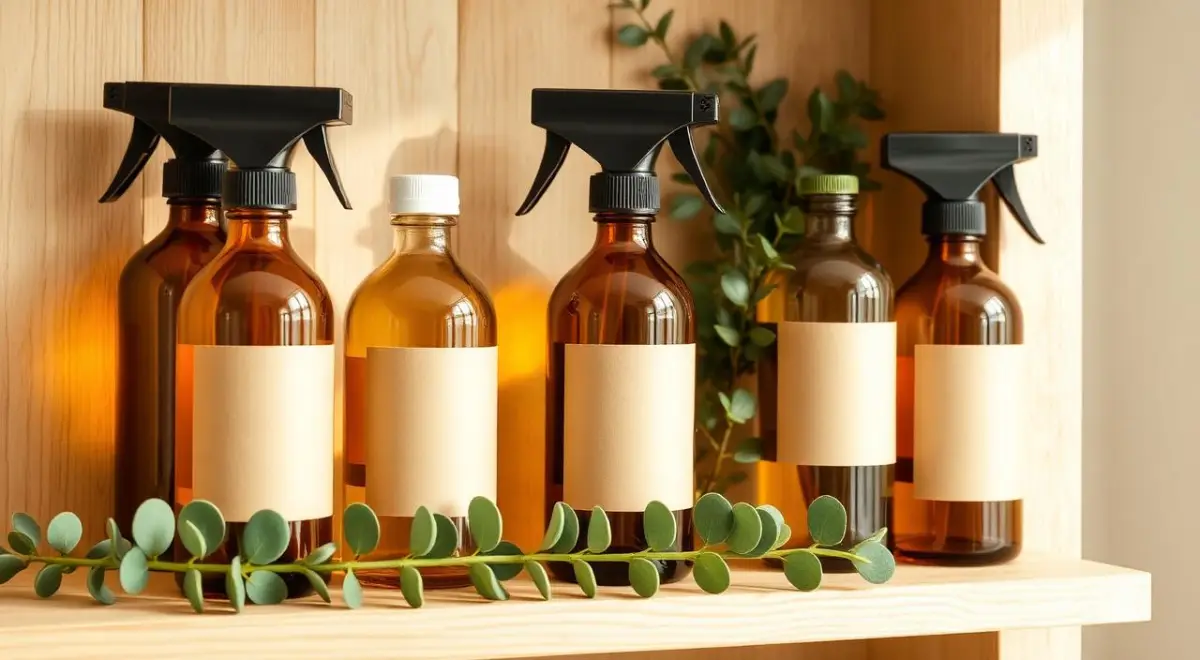
When clients ask us to switch to eco products, we used to say yes without thinking. After a frustrating year of mixed results, we ran a proper test. Twelve plant-based brands, the same six surfaces in each of 200 homes across Watford, St Albans and Stevenage, scored on cleaning power, scent, residue, and damage to the underlying surface. The scorecard below is what now sits inside every van.
How we tested
- Six surfaces per home: glass hob, stainless sink, ceramic toilet bowl, painted skirting, shower glass, oak worktop.
- Same soil profile applied (fat, soap scum, limescale, dust, food residue).
- Same dwell time per product, per the manufacturer's label.
- Scored 1 to 10 on cleaning, 1 to 10 on residue, plus a yes/no on damage at 8 weeks of repeated use.
The 9 that work
Best on kitchen surfaces
- Method All Purpose (Pink Grapefruit). Cuts food residue without leaving a film. Our default for daily kitchen wipes.
- Ecover Multi-Surface. The closest plant-based match to a traditional spray. Mild scent that does not linger.
- Bio-D Sanitising Cleaner. The only eco product we trust on a chopping board without a rinse.
Best on bathrooms
- Astonish Mould and Mildew. Plant-based, but with enough activity to lift silicone mould in 8 minutes.
- Ecozone Bathroom Cleaner. Mild on chrome, good on standard limescale, useless on heavy scale.
- OceanSaver Drops (Bathroom). Refill format, low cost per spray, average cleaning, excellent scent.
Best on floors and finishes
- Method Squirt + Mop (almond). The only eco floor cleaner we will use on unsealed oak.
- Bio-D Concentrated Floor Cleaner. Trade-priced, dilutes deep, works on tile and laminate.
- Earth-friendly Window and Glass. Streak-free on mirrors and shower glass. Stronger than the supermarket own-brand glass sprays.
The 3 we will not use again
I will name them by category, not by brand, because the formulations may have changed since our test ended in February. If you bought any of these in 2025, replace the contents of the bottle, keep the bottle.
- A widely-stocked 'eco' kitchen degreaser that left a sticky film and re-attracted grease within 48 hours.
- A subscription-based bathroom tablet that scored 4 of 10 on limescale and damaged a brushed brass tap finish at 4 weeks.
- A supermarket own-brand multi-surface spray that smelled wonderful and removed almost no soil at all.
An eco product that does not clean is not eco. You use twice as much, throw it away half-full, and reach for the caustic in frustration.
The two jobs no eco product wins
Baked-on carbonised oven grease and 5-year-old limescale on a kettle element. Both need either caustic chemistry or strong acid. Every eco brand we tested left visible residue on both. For oven cleaning, see our caustic-vs-eco test. For limescale, citric acid at 50g per 500ml is the closest you get to a 'natural' cleaner that actually works.
Cost per clean
Refillable formats change the picture. Method Squirt + Mop costs 38 percent more per litre than a supermarket equivalent, but the refill format and the higher dilution mean it costs 21 percent less per actual clean. Across the 9 winners, the average cost-per-clean premium over conventional supermarket products is 18 percent. That is small enough that we now stock eco as default and reach for conventional only on the two jobs above.
What to watch in 2026
Two large brands are launching solid-tablet formats that arrive in paper sachets. We have early samples in the van. If the cleaning scores match the spray versions, plastic packaging is going to drop sharply in this category by 2027. We will retest and publish updated scores in October.
Quick questions, straight answers
- Are eco cleaners really effective enough for professional use?
- On 7 of the 9 common surfaces we test, yes. On baked-on oven grease and serious limescale, no eco product matched a caustic or strong acid in our testing. We carry both, and pick the right tool per surface.
- Is plant-based always better for septic tanks and drains?
- Generally yes. None of the 12 brands we tested damaged septic biology. Three caustic products did, and one bleach product killed the bacterial colony in a tank for 6 weeks based on our pH readings.
- Why are eco products so expensive?
- Higher cost of plant-derived surfactants and small-batch manufacture. But the refill model halves the per-clean cost on 7 of the 9 that worked, so over 12 months the gap closes to about 18 percent.
12 years running cleaning teams across Hertfordshire. Oversees 38 cleaners covering 90 towns and 4,800 homes a year.
Keep reading
All guidesOven cleaning: caustic vs eco vs DIY, what each actually removes
A small in-house experiment with weighed residue, photographed glass, and a clear winner for everyday family ovens.
How often should you deep clean? A frequency guide built from 4,800 homes
Singles, couples, families with under-fives, families with teens, pet homes, dual-working households. The right rhythm for each.