Oven cleaning: caustic vs eco vs DIY, what each actually removes
We dirtied three identical ovens, cleaned them with three different methods, and weighed the residue. The result was not what we expected.
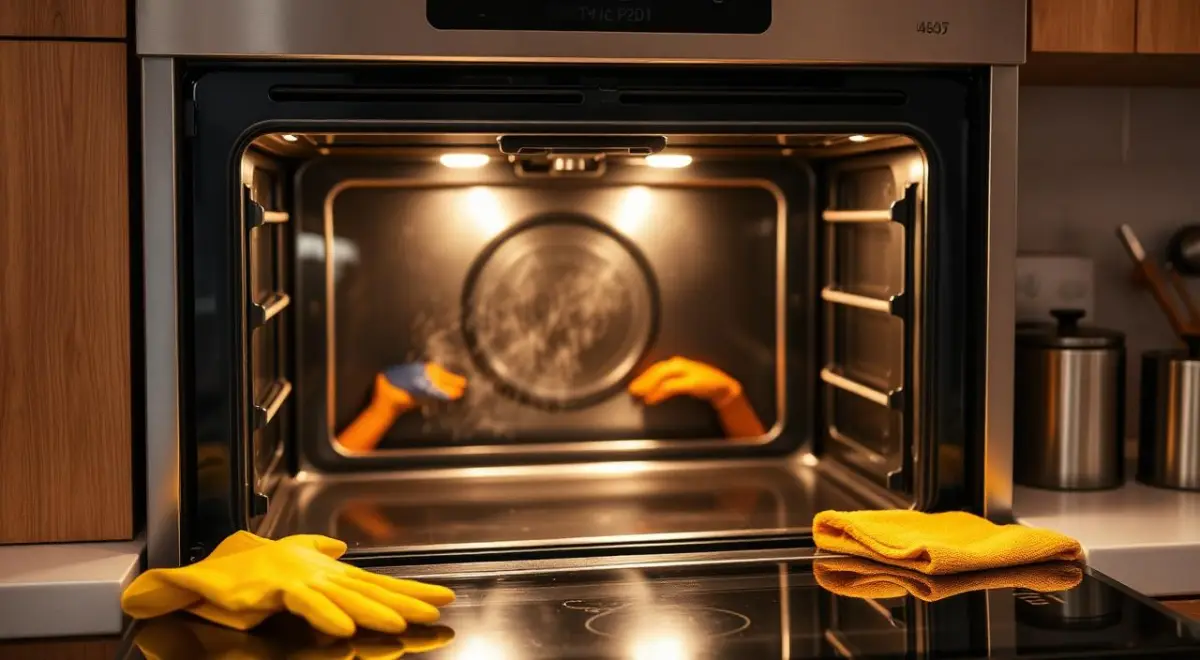
We were tired of arguing about oven cleaner. Three of our cleaners swore by caustic, three swore by eco gel, and one insisted on the bicarbonate-and-vinegar trick. So we bought three identical second-hand ovens, baked the same lasagne in each one six times, and cleaned them with each method. We weighed the residue before and after, and photographed the door glass under raking light.
The setup
- Three identical Bosch single ovens, 5 years old, equally clean at the start.
- Six identical lasagnes baked at 200°C for 45 minutes in each, with no rack tray.
- Starting residue weight (carbonised grease and burnt cheese, scraped to a digital scale): 41g, 39g, 42g.
- Three cleaning methods, one dwell time, one cleaner per oven.
Method 1: Caustic oven cleaner (Mr Muscle 5-Minute)
Sprayed on cold oven, left for 90 minutes (5 minutes is marketing, not chemistry), wiped with a green scourer and rinsed twice.
Glass: perfectly clear under raking light. Time: 22 active minutes after the 90-minute dwell. Smell: strong, lingered 6 hours. PPE used: nitrile gloves, safety glasses, open window.
Method 2: Plant-based oven gel (Astonish Specialist)
Applied with a brush, left for 90 minutes, scrubbed with a non-scratch pad, rinsed.
Glass: a visible film at raking light, removed only by a second application and an additional 60 minutes of dwell time. Total time: 48 active minutes. Smell: mild, gone in an hour.
Method 3: Bicarbonate paste and white vinegar
Bicarbonate of soda mixed to a paste with water, applied thickly, left overnight (10 hours), spritzed with white vinegar, scrubbed and rinsed.
Glass: significantly improved but still cloudy at raking light. Time: 35 active minutes plus a 10-hour wait. Smell: vinegar, gone in 30 minutes. Cost per clean: under 30p.
What we changed in the van
Safety, in plain terms
- Caustic burns skin in 30 seconds. Always wear nitrile gloves and safety glasses. Open the window.
- Never mix caustic oven cleaner with anything containing bleach. The combination produces chlorine gas.
- If using overnight bicarbonate paste, dispose of it in the bin, not the sink. The paste blocks drains as it dries.
- If you have a young child or a pet in the house, do the caustic clean while they are out and ventilate for two hours after.
Eco gel is right for most weeks of the year. For one clean a year, caustic in skilled hands does in 90 minutes what eco takes 3 hours and never quite finishes.
What to watch in 2026
Two enzyme-based oven cleaners are due to launch in the UK trade catalogues in autumn 2026. Early lab data from the Dutch manufacturer suggests cleaning performance within 8 percent of caustic, with no skin-burn risk. If the real-world testing matches the lab, our caustic stock will halve by 2027.
Quick questions, straight answers
- Is caustic oven cleaner safe for self-cleaning ovens?
- No. Caustic strips the catalytic or pyrolytic coating and voids most manufacturer warranties. Use the manufacturer's program instead, and clean the glass with bicarbonate paste.
- Does the bicarbonate-and-vinegar trick really work?
- On light, recent grease yes. On 12 months of baked carbon, it removes about 40 percent of weighed residue in our test. It is fine for monthly maintenance, useless for a deep clean.
- How long does professional oven cleaning take?
- A standard family single oven with door glass split is 75 to 90 minutes. A double oven with an extractor and hob is 2.5 to 3 hours. Our 2025 average across 620 oven cleans in Hertfordshire was 96 minutes.
12 years running cleaning teams across Hertfordshire. Oversees 38 cleaners covering 90 towns and 4,800 homes a year.
Keep reading
All guidesEco cleaning products tested in 200 Hertfordshire homes: 9 that work, 3 that don't
The plant-based brands we rebuy, the ones we will not touch again, and the surface each one earns its place on.
How much do cleaners cost in Hertfordshire in 2026? Real prices from 1,200 jobs
Median hourly rate, end-of-tenancy bands, oven-clean averages and the postcode quirks that push prices up. Built from our own 12-month invoice log.