New-build cleaning in Hatfield, Welwyn and Bishop's Stortford: the snagging clean nobody talks about
Plaster dust, silicone smears and protective film residue: the three-pass clean every new build needs in the first week.
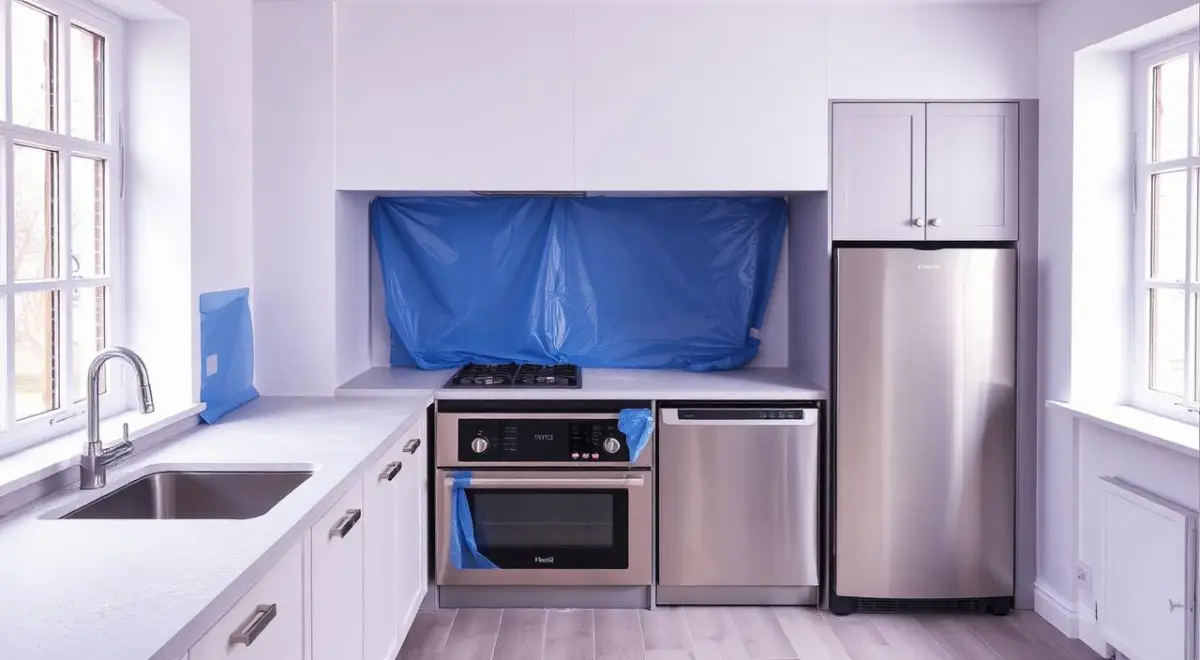
We have cleaned around 240 brand new homes across the Welwyn Garden City, Hatfield and Bishop's Stortford developments since 2022. The developer's handover clean is the bare minimum. Every new build needs three distinct cleans in its first month to be properly habitable. Skip them and the dust, residue and film keep showing up for a year.
Pass 1: the dust pass (day 1 to 3)
Fresh plaster releases fine alkaline dust for at least 14 days as it cures. It settles on every horizontal surface, inside every light fitting, and on top of every wardrobe and kitchen unit. The first pass is a vacuum-first operation, not a wipe-first.
- Vacuum every surface from ceiling down with a HEPA-filtered machine and a soft brush attachment.
- Run a damp microfibre over each surface immediately after the vacuum. Dry wiping just moves dust around.
- Open all windows on dry days. Plaster dust cures faster with airflow.
- Replace the vacuum filter or empty the bagless chamber outside. The dust will block a standard filter in one job.
Pass 2: the residue pass (day 4 to 7)
Once the dust is down, the residues show. Silicone smears around the bath, sealant overspray on tile grout, paint flecks on door hinges, sticky labels on every appliance, protective blue film on stainless steel, and the worst offender: window film adhesive that has started to bake on in the sun.
- 1Silicone smears: remove with a plastic scraper and white spirit on a cotton bud. Do not use a metal blade on the bath enamel.
- 2Protective film: peel within the first 7 days. After that the adhesive cures and needs orange-oil solvent.
- 3Sticky labels on glass and appliances: warm soapy water, 5 minutes dwell, then a plastic scraper.
- 4Hinge and handle paint flecks: a soft brass brush and gentle pressure. Never a steel wire brush.
- 5Window adhesive (the worst job): orange-oil solvent on a microfibre, repeated until clean. Allow 30 minutes per window in a sunny aspect.
Pass 3: the settling pass (week 3 or 4)
Three weeks in, the property has settled. Doors have moved on their hinges, taps have been used, the heating has run, and a fresh layer of fine dust has fallen from light fittings and ceiling shadow gaps. The third pass is the lightest of the three, but it is the one that turns the property from new-built to lived-in.
- Re-vacuum tops of wardrobes, kitchen units and pendant lights.
- Re-wipe skirting boards: dust has resettled.
- Run all taps for 60 seconds each to flush copper residue from the pipes. Wipe the aerators after.
- Test the extractors in the kitchen and bathrooms. Many are shipped with a film inside the housing that has to come out manually.
Snags we find every week
While we clean, we list snags. The top three across Welwyn and Hatfield handovers in 2025 were: silicone bridging the bath-to-tile joint instead of sealing it (it cracks within 8 weeks), kitchen plinths cut short by 2mm so they fall out (developer will not replace after 12 months), and bathroom extractor fans wired to the light switch but not to the timer (run only while the light is on and never clear the steam).
A new build is a building site that ends at the front door. Treat it as one for the first month and it will be a home for the next thirty years.
What to watch in the first year
- Hairline cracks at the corners of door frames. Normal as the house dries. Fill at the 12-month snagging point, not before.
- Grout darkening in the kitchen. Plaster dust trapped in the grout during the first weeks. Re-seal in month 6.
- Window seals weeping in winter. Combination of moisture from drying plaster and a not-quite-closed trickle vent. Wipe weekly until April.
Quick questions, straight answers
- Does the developer clean the property before handover?
- Yes, but only a 'broom clean'. That removes large debris. It leaves plaster dust on every horizontal surface, silicone smears around baths and showers, and protective film on appliances.
- How soon after moving in should we deep clean?
- Within the first 7 days. Plaster dust continues to fall out of the air and out of light fittings for the first 14 days. A clean done immediately will need a second pass within a fortnight.
- Is new-build dust dangerous?
- Fresh plaster dust is alkaline and irritating to lungs and eyes. It is not classified as hazardous, but children and asthma sufferers feel it within hours. Vacuum with a HEPA filter, not a dry brush.
12 years running cleaning teams across Hertfordshire. Oversees 38 cleaners covering 90 towns and 4,800 homes a year.
Keep reading
All guidesCleaning a Victorian terrace in St Albans: what 12 years on AL postcodes taught us
The five materials in a Victorian Hertfordshire terrace that need a different approach, and the products we trust on each.
Pollen, A1(M) traffic film and wood-burner soot: the 3 Hertfordshire dust sources we measure
Tree-pollen calendar, motorway proximity, and the rise of the home wood-burner in commuter villages.