Cleaning a Victorian terrace in St Albans: what 12 years on AL postcodes taught us
Sash windows, original tiles, lime mortar and the cleaning mistakes that damage period homes.
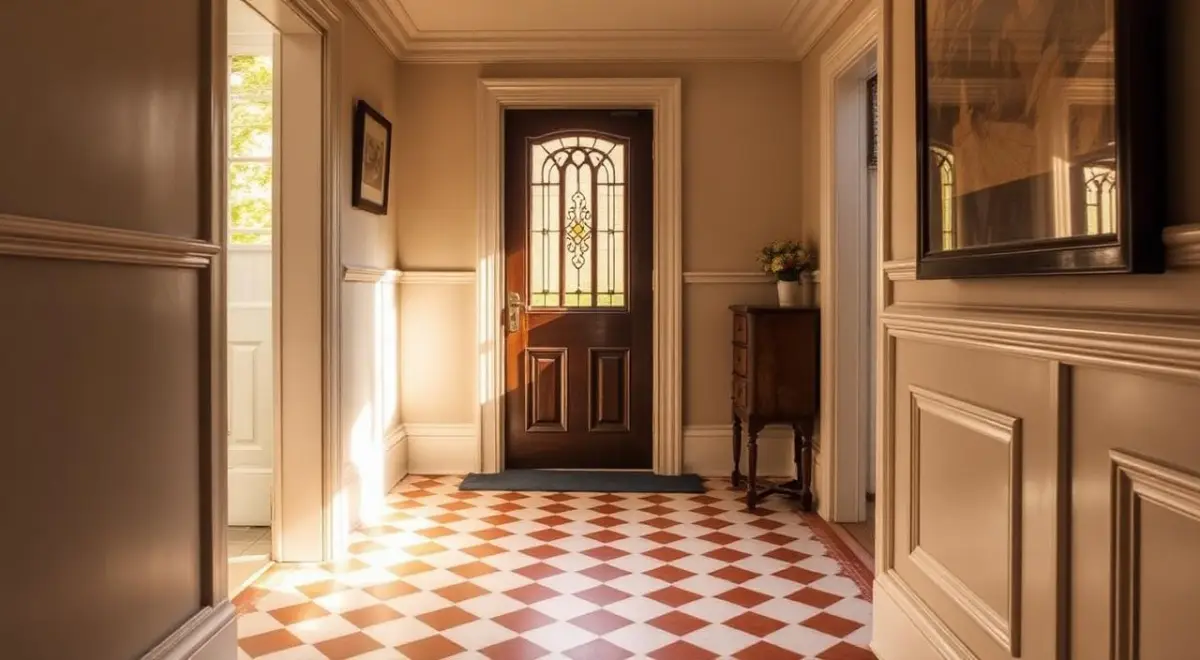
St Albans, Harpenden and Hertford all have streets of Victorian terraces built between 1870 and 1905. We have cleaned them for 12 years. They look beautiful, and they punish the wrong cleaning product. Below are the five materials that need a different approach, and the mistakes we see every week when a new client switches to us after a previous cleaner has caused damage.
1. Encaustic floor tiles in the hallway
Cream, red and black geometric tiles, often laid in a Greek key border. They are unglazed clay with pigment fired through the body. They are porous, and the pigment is softer than modern porcelain.
- Do not use bleach. It pulls the colour out of the red and black tiles within 6 months.
- Do not use a steam mop on full power. Brief passes only, never held in one spot.
- Do use a pH-neutral floor cleaner, diluted, with a flat damp mop. Rinse with clean water.
- Re-seal every 3 years with a breathable impregnator. Sealed tiles last 50 years longer.
2. Lime mortar pointing on exposed brick
Many St Albans terraces have an exposed brick chimney breast or fireplace surround. The pointing between the bricks is lime mortar, which is softer and more breathable than modern cement.
3. Original brass door furniture
Letterbox, door knob, finger plate, escutcheon. Some are lacquered, most are not. Strip the lacquer test by rubbing a small spot with white spirit on a cotton bud: if no yellow film comes off, the brass is bare.
On bare brass we use citric acid solution at 30g per 500ml warm water, applied with a soft cloth, then rinsed and dried. On lacquered brass we use a damp microfibre and nothing else. Brasso strips lacquer in two cleans.
4. Sash windows and their pulleys
The pulley wheel at the top of the frame jams when dust accumulates. Vacuum the parting bead and the upper recess with a soft brush attachment every quarter. A drop of clear silicone lubricant on the wheel keeps it spinning. The sash cord itself should never be oiled: it absorbs the oil and rots from the inside.
5. Cast iron fireplaces and tiled inserts
Soot, polish residue, and a hundred years of well-meaning attempts at restoration. Cast iron is forgiving. The tiled inserts are not. The tiles are usually glazed earthenware with hairline cracks that hold water and lift the glaze.
- 1Vacuum loose soot first, never wipe it.
- 2Use a soft brush and a black grate polish on the cast iron. Buff with a dry cloth.
- 3On tiles, a damp microfibre is enough. No abrasives, no chemical cleaners.
- 4Dry the tiles completely before lighting a fire — trapped water cracks the glaze further.
A Victorian house wants what a Victorian housekeeper would have used: soft cloths, mild soap, time. Modern aggressive chemistry is faster and does more damage in a year than 50 years of careful cleaning.
How often to deep clean
A Victorian terrace benefits from a deep clean twice a year, in March and October. The March clean handles winter soot and chimney residue. The October clean handles summer pollen and prepares the house for the heating season. Quarterly maintenance covers the sash windows, the brass and the tiled hearth.
What to watch in your own house
- Mortar dust on the floor under brickwork: lime mortar starting to fail. Get a specialist before the brick moves.
- Tiles in the hallway with bright cleaning patches: previous cleaner has used bleach. Re-sealing will even the colour over 12 months.
- Sash window dropping in the open position: pulley cord starting to fray. Replace before it snaps.
Quick questions, straight answers
- Can I steam clean Victorian floor tiles?
- Encaustic tiles, yes, briefly. Original Victorian quarry tiles laid on lime mortar, no. The heat lifts the tile bond. Use a damp mop with a pH-neutral cleaner instead.
- What is the safest product for original brass door fittings?
- A soft cloth and citric acid solution at 30g per 500ml. Avoid Brasso on lacquered brass and avoid any acid spray on bare brass left to soak.
- Do sash windows really need different cleaning?
- Yes. The pulleys and weights inside the frame collect a century of dust. Vacuum the parting bead with a brush attachment quarterly, otherwise the sash sticks and the cords fray.
12 years running cleaning teams across Hertfordshire. Oversees 38 cleaners covering 90 towns and 4,800 homes a year.
Keep reading
All guidesHertfordshire hard water map: limescale severity by postcode, and what actually works
The postcodes with the heaviest limescale load, and the 3 products that beat the other 9 in our test.
New-build cleaning in Hatfield, Welwyn and Bishop's Stortford: the snagging clean nobody talks about
Why a new-build needs three different cleans before it is ready to live in, and what each one targets.